Referral Banners
Showing posts with label Arround The World. Show all posts

The 10 Strangest Laws Around the World

01. Singapore
In a bid to keep the streets of this super-efficient city clean, the authorities in Singapore decided in 1992 to ban chewing gum completely. Stick to a mint. 09 More after the break...
02. Eraclea, Italy
Many holidaymakers head to the sandy beach at Eraclea to escape the hordes of tourists in nearby Venice. Unfortunately, those who enjoy building sandcastles can think again – it’s forbidden.

03. Amsterdam, Netherlands
A curious loophole in the law means that smoking tobacco in a public place such as a coffee shop in Amsterdam is banned, while puffing away on pure cannabis is entirely legal.

04. South-East Asia
The durian, a fruit native to Brunei, Indonesia and Malaysia, has a smell so incredibly strong that it is banned from many public places in South-East Asia.

05. Florida, USA
For those who are young, free and single and enjoy jumping out of planes in their spare time, be careful if you’re in Florida – unmarried women who parachute on Sundays can be jailed.

06. Switzerland
Bizarrely, flushing the toilet in a Swiss apartment is illegal after 10pm. It is also against the law for a man to relieve himself while standing up after 10pm.

07. Eboli, Italy
Honeymooners might be best to avoid hiring a car in Eboli, just south of Naples. Kissing in a moving vehicle here can carry a fine of up to €500.

08. Capri, Italy
Locals in Capri, northern Italy, must value their peace and quiet – a couple were arrested recently for wearing excessively noisy flip-flops, following the introduction of a ban on ‘noisy footwear’.

09. Alabama, USA
The Southern American state has a quite superfluous law in place which states that it’s illegal to be blindfolded while driving a vehicle.

10. Dubai, UAE
Dubai’s luxurious resorts and stunning beaches may seem like the ideal place to spend a romantic holiday, but don’t get too affectionate – kissing in public here is illegal, and many tourists have fallen foul of this law in recent years.
Via — Link

Modern Paris and Paris 1940

Very interesting historical project of Sergey Larenkova. On each of his work combines modern Paris and Paris 1940.

By early June 1940 the main forces of the French armies were broken or cut off to the north. The road to Paris with the German troops had broken through was open. 14 July 1940 the German army entered Paris. Started during the occupation. Upper picture - Paris, 1940. Hitler leadership of the Reich at the Trocadero | Paris, 2010. Military governor, General Henri Fernand Denz declared Paris an "open city", the empty three-quarters of the capital a month after the beginning of Germany's active military operations against France, were without fighting German troops. Paris, 1940. German soldiers marching down the Arc de Triomphe. 17 More images after the break...
Occupation of Paris
By early June 1940 the main forces of the French armies were broken or cut off to the north. The road to Paris with the German troops had broken through was open. 14 July 1940 the German army entered Paris. Started during the occupation. Upper picture - Paris, 1940. Hitler leadership of the Reich at the Trocadero | Paris, 2010. Military governor, General Henri Fernand Denz declared Paris an "open city", the empty three-quarters of the capital a month after the beginning of Germany's active military operations against France, were without fighting German troops. Paris, 1940. German soldiers marching down the Arc de Triomphe.
Remaining in Paris, residents were awakened by a speech from the speakers in French with a strong German accent on establishing a curfew from eight o'clock till five in the morning. It also stated: "The Parisians! In the next two days, troops of the Reich will take a solemn march to Paris, all stay home! "New authority to command all the clocks move forward one hour. Paris lived as a Nazi laws and Berlin time.

Paris, 1940. German cavalry in the streets of the occupied city.

Paris, 1940. Montmartre | Paris, 2010.
It turned out that the photo is the one restaurant, which in 1814 first called the "Bistro." According to legend, the name comes from the Russian Cossacks who wanted to eat quickly.
There is a story, according to which Hitler was able to climb the Eiffel Tower, as the elevators were knocked out do not want to obey the new authorities of the French. He could only be photographed against the backdrop of the towers.

Paris, 1940. Against the backdrop of the Eiffel Tower | Paris, 2010.

Paris, 1940. Parade of the occupiers on the Champs Elysees. | Paris, 2010

Paris, 1940. Rue de Rivoli. | Paris, 2010.

Paris, 1940. The parade of invaders | Paris, 2010.


Paris 1940. Wehrmacht at Place de la Concorde | Paris, 2010.

Paris, 1940. The parade of invaders from the Arc de Triomphe | Paris, 2010.


Paris, 1940. The parade of invaders from the Arc de Triomphe | Paris, 2010.

Paris, 1940. German cavalry on the Avenue Foch | Paris, 2010.

Liberation of Paris

Summer 1944. The Red Army liberated Belarus leads fight for Poland. Landed in Normandy on 6 June the Allies advance eastward. Plans for the American command did not include the immediate release of Paris, they rush to Germany.

Without waiting for the Americans, August 18, 1944 French Resistance fighters raised a rebellion in Paris. With extensive experience in the revolt and revolution in Paris residents go to the barricades.

Paris, 1944. Paris uprising. Barricade on the waterfront Grand Augustin | Paris, 2010.

To the credit of the Paris police, from the very beginning of the uprising actively sided with the people and with the resistance fighters clashed with the Nazis.

Paris, 1944. Parizhkoe rebellion. Place de la Concorde | Paris, 2010.
The uprising swept the city, the Germans entrenched in strongholds provide enhanced resistance, which finally succeeded in breaking with the approach of General Leclerc tank shell of troops fought the French, led by De Gaulle. Thus, 24 August, Paris was completely liberated by the French themselves. On the streets of Paris came a crowd of enthusiastic townspeople to meet liberators.

Paris, 29 August 1944. Victory Parade | Paris, 2010.
The protagonist of the liberation of Paris future French president General Charles De Gaulle marched at the head of the column on the Victory Day parade.

Paris, 1944. De Gaulle led the parade in honor of the liberation of the city | Paris, 2010.
Solemn steps walked along the Champs-Elysees and the U.S. Marines, who for the liberation of Paris had no direct relationship, but his blood shed on French soil.

Paris, 1944. Parade in the liberation of Paris | Paris, 2010.

Paris, 1944. U.S. Marines on the Champs Elysees | Paris, 2010.
And yet Paris helped to liberate our fellow citizens who are former prisoners who participated in the Resistance, who also participated in the parade.

Via — Link

10 Spectacular Cliff-Side Villages in Europe

There are some places in the world where living on a rock doesn’t carry a negative connotation. We caught up with ten in particular which offer spectacular sanctuary and brilliant views.

01. Metéora, Greece
Via — Image
Meaning “suspended in the air”, the UNESCO World Heritage Site of Metéora, in the Pindus Mountains of central Greece, spans six Orthodox monastery museums. A total of two dozen were built in the 14th century but most of were destroyed during the Ottoman occupation and Second World War. A famous landscape from the James Bond film For Your Eyes Only, Metéora provides a peaceful haven not only for monks, but also for tourists that choose to take a hike up the mountains to see these gems. All six monasteries are connected through asphalt roads and are accessible by steps hewn into the rock. You will need at least one full day to visit Metéora, but the experience is certainly worth the time and effort. 09 More after the break...

02. Cuenca, Spain
Via — Image
Another UNESCO World Heritage Site, the Historic Walled Town of Cuenca is a wonderful destination in Castilla-La Mancha, Spain. What makes it unique is its location on a steep cliff with some superb 15th century “hanging houses”. Take pictures of the beautiful scenery, then head to Plaza Mayor in the Old Town for a tapas and drinks in one of the numerous bars and pubs. While in Cuenca, don’t miss the Ciudad Encantada (“Enchanted City”), a site with otherworldy geological formations.

03. Cinque Terre, Italy
Via — Image
Cinque Terre is composed of Monterosso, Vernazza, Corniglia, Manarola and Riomaggiore, five small villages built on a precarious stretch of rocky Liguria coast. A UNESCO World Heritage Site since 1997, the car-free area is accessible by train, eco-friendly electrical bus, ferry, bike and of course, on foot. Each town has its own quaint charm: Riomaggiore is home to many artists and great beaches; Vernazza is a natural harbour overlooked by a ruined castle; Monterosso has gorgeous sandy beaches and excellent seafood; Corniglia sits on a hilltop, attracting many hikers and Manarola offers remote rocks for private sunbathing. Visitors will have to pay a small entrance fee to help preserve Cinque Terre’s beauty, but it is definitely worth it.
04. Bonifacio, Corsica, France
Via — Image
Set on Corsica’s southernmost point, Bonifacio owes its charm to medieval houses built on dazzling limestone cliffs. Built by the Genoese, Bonifacio’s Old Town is a fascinating maze of narrow streets, where you can wander around for hours. More Italian than French, the town has strong Renaissance influences and an old dialect from the times of the Genoese is still spoken to this today. Bonifacio’s natural harbour has been transformed into a chic marina, where tens of yachts from the Mediterranean come to drop anchor. You will find a vibrant display of trendy bars, restaurants and hotels, with a landscape of superb unspoilt beaches and rugged mountains. This all results in high prices and large crowds all through the summer months.

05. Castellfollit de la Roca, Spain
Via — Image
This small village in Girona, Catalonia is set on a steep cliff overlooking the Fluvià river. The basalt cliff the village is on is a result of two lava flows that took place thousands of years ago. Due to its unique location, Castellfollit de la Roca is illuminated after nightfall until midnight for 6 months throughout the year. The village was built during medieval times with dark, narrow streets and houses made from volcanic rock. Apart from its spectacular location, Castellfollit is a gateway to the Natural Park of the Volcanic Area of the Garrotxa, where you can admire beautiful volcanic scenery.

6. Mont Saint-Michel, France
Via — Image
Located on a cone-shaped island in Normandy, France, Mont Saint-Michel is the small islet home of a Gothic castle built during medieval times and several monastic buildings originating from the 13th century. The structure that trumps the rest is a beautifully-preserved Romanesque church made of pure granite. Mont-Saint-Michel is one of the most popular UNESCO World Heritage Sites in France, attracting over four million visitors a year. Apart from its castle and monasteries, there is a small town at the base of the island offering good accommodation and scrumptious meals.

07. Santorini, Greece
Via — Image
The Aegean Sea gem of Santorini is part of the Cyclades volcanic archipelago. A good deal of the the island’s architecture, from Santorini hotels to private villas, is built on high cliffs. As a result this island of natural white, black and red beaches offers remarkable views.

08. Siurana, Spain
Via — Image
Unless you practice mountain-climbing, you most probably have not heard of Suriana – a superb small village set on a cliff edge, bathed by clouds. For climbers, the Girona, Catalonia town with steep limestone walls is a must. An affordable campground lures a wide variety of travellers. Once there, don’t miss Siurana’s old village, formed of centuries-old buildings, crowned by a beautiful church perched on a mountain top.

09. Ronda, Spain
Via — Image
Within the province of Málaga, Spain, Ronda is a supremely popular tourist destination that retains much of its historic charm. The town is divided in two by a river gorge and connected by the Puente Nuevo. On one side, you will find many historic buildings in the old Moorish town, while on the other – El Mercadillo – lies a more modern settlement. Visit the art museum in Old Ronda or follow the cobbled alleys to Plaza Duquesa de Parcent, a superb public space with numerous historical buildings. Palacio de Mondragón, the home of the Moorish King Abb el Malik, is one of Ronda’s highlights, offering its visitors a look into the city’s past, as well as beautiful gardens and courtyards for a relaxed stroll. The Arab baths dating back from the 13th century can be found below the city.

10. Rocamadour, France
Via — Image
Rocamadour and Ronda have a lot in common. The spectacular town in southwest France is a Christian pilgrimage site, with chapels and churches set high on a rocky plateau. The town’s sanctuary of the Blessed Virgin is accessible via a 216-step stairway which many pilgrims climb on their knees. Do not miss the city’s caves, with art from the Paleolithic era, and the delicious local cheese.

Air Traffic Over the World

Map of the World Fair

That would look like a world map if the area for each country is distributed according to population. This should be carried one condition: the whole country habitable. See the picture in full size.

World’s Top Ten Friendliest Countries

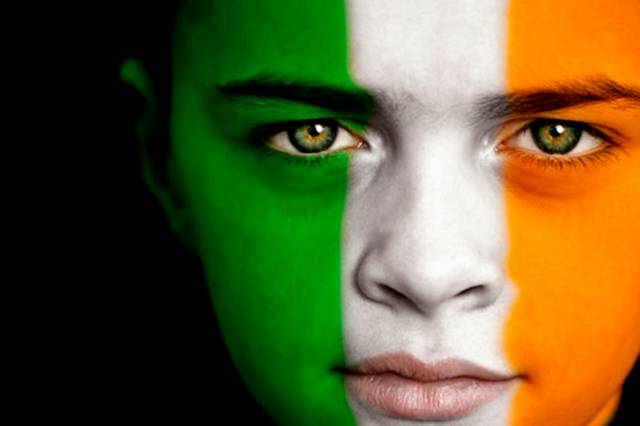
01. Ireland

Centuries of turmoil, conquest, famine and subsequent immigration  have certainly taken their toll on the Irish: it’s left them with a deliciously dark sense of humour and a welcoming attitude towards strangers. That famous ability of the Irish to find craic (fun times) in boom or bust times means you’re always in for a treat.
Here is the list of top ten friendliest countries of the world, after the break...
02. Samoa
What’s this? Samoa reckons they have ‘the world’s friendliest people’? Hmmm, trouble is there’s no ratifying body for such a claim, meaning the Samoans have to contend with the challenge of Fiji, which also self-applies the title. Though readers can rest assured that Samoa harbours lovely and warm people.


03. United States
Blamed for the coming of World War III, the Anti-Christ, Bon Jovi, Tom Cruise, Michael Jackson, rampant street crime and noise pollution through overloud talking, Americans just take it all in their stride. Americans may be patriotic and love their country but they’ll invariably welcome you and help you get the best out of the United States.

04. Malawi
Whereas other African nations are beset by tribal war and fighting, Malawians describe themselves as ‘the friendliest people in Africa. Anyone who’s visited will know that the rare (for Africa) cohesion of the country’s ethnic groups is solid evidence for this, as is the people’s propensity to welcome you into their homes as well as their nation.

05. Fiji
Fijians have got plenty to smile about lush islands, kaleidoscopic reefs, cobalt sea, a wealth of marine life, world-class diving, romantic coastlines, awesome cuisine and they love to spread the love around. Fijians have a rep for helping all travellers feel welcome, thereby allowing you to uncover the best from this sprawling group of islands.

06. Indonesia
It’s hard to make generalisations about a country that contains so many different cultures still, a cliché you’ll hear often is that Indonesian people greet foreigners with open arms. Fact is they do, but the media limelight is stolen by the knack of their law-enforcement officers for welcoming drug dealers and bomb makers in an altogether different ritual.

07. Vietnam
Vietnam’s another country inextricably caught up in Western images and stereotypes: napalm death; tormented American soldiers; assassins hiding in the rice fields. But Vietnam put all that behind it a long time ago and is now on a drive to become the new ‘Asian’ tiger economy.

08. Thailand
Southeast Asia’s most-visited country is bound to offer up a welter of stereotypes and clichès. Here are some of them: dazzling islands and beaches; lush and balmy weather; great shopping and great food; the ‘France of Asia’. The Thai people’s gracious hospitality does indeed take some beating.

09. Scotland
Scotland’s becoming the destination for visitors to the British Isles, winning out over London. The Scots have survived English invasion, brutal weather and the pain of having the world’s worst goalkeepers. This fighting spirit against insurmountable odds has left them with an extroverted, buoyant demeanour and a blackly humorous nationalism.


10. Turkey
It’s a shame that for such a long time the Western world’s image of Turkey revolved around the drug-smuggling film Midnight Express. Thankfully, we can report the Turkish people actually have an unsurpassed reputation for hospitality. With their heavenly cuisine, dreamy coastline and historical sites, the Turks know there’s no reason to be secretive.
Via Link

Traditional masks — Iranian Women

Ostovar - 55 years, 8 children, housewife. Wear a mask for religious reasons and to protect the skin from the sun.
Despite the fact that many eastern women say they wear their hats with masks because of religious concepts, this tradition came long before the rise of Islam. Rural populations in the southern part of Iran said that this tradition of referring the Koran, but its origins seem to go far in the nomadic period in this region, where both men and women wore hats and masks to protect people from sun and strong desert winds. More after the break...
This tradition has survived, and today in rural parts of Iran, as well as in Oman, UAE and Saudi Arabia can still see these masks. Usually in such regions girl hiding from the groom their faces behind a mask until the wedding. Men here do not wear masks, but women, especially the elderly, still revere the tradition.
Roja - 12 years old, wears a mask whenever he wants.
Roya has no mask.
Fatemeh - 50 years, 11 children, a homemaker, wears a mask only to protect the skin.
Fatemeh same time without the mask.
Ostovar that was the first photo. It has three different masks.
This Ostovar without a mask.
Zeinab - about 60 years, 10 children, 6 of whom died, a homemaker. Wear a mask for religious reasons and to protect the skin from the sun.
Gohar - 26 years, two children, a homemaker. Wear a mask for religious reasons and to protect the skin from the sun.
Zobeida Ostovar - 30 years old, 5 children, homemaker. Wear a mask for religious reasons and to protect the skin from the sun.
Fatima - 65 years, 6 children, selling tobacco on the market. Wear a mask for religious reasons.
Mashad flights - 55 years old, 6 children, sells tobacco in the market. Wear a mask for religious reasons.
Gohar - 20 years, 1 child, a homemaker. Wear a mask for religious reasons and to protect the skin from the sun.
Armaneh - 35 years old, 5 children, homemaker. Wear a mask for religious reasons and to protect the skin from the sun.
Alemeh - 40 years, selling scarves on the street tray.
QoinPro.com: Free Bitcoins every 24 hours
Related Posts Plugin for WordPress, Blogger...